
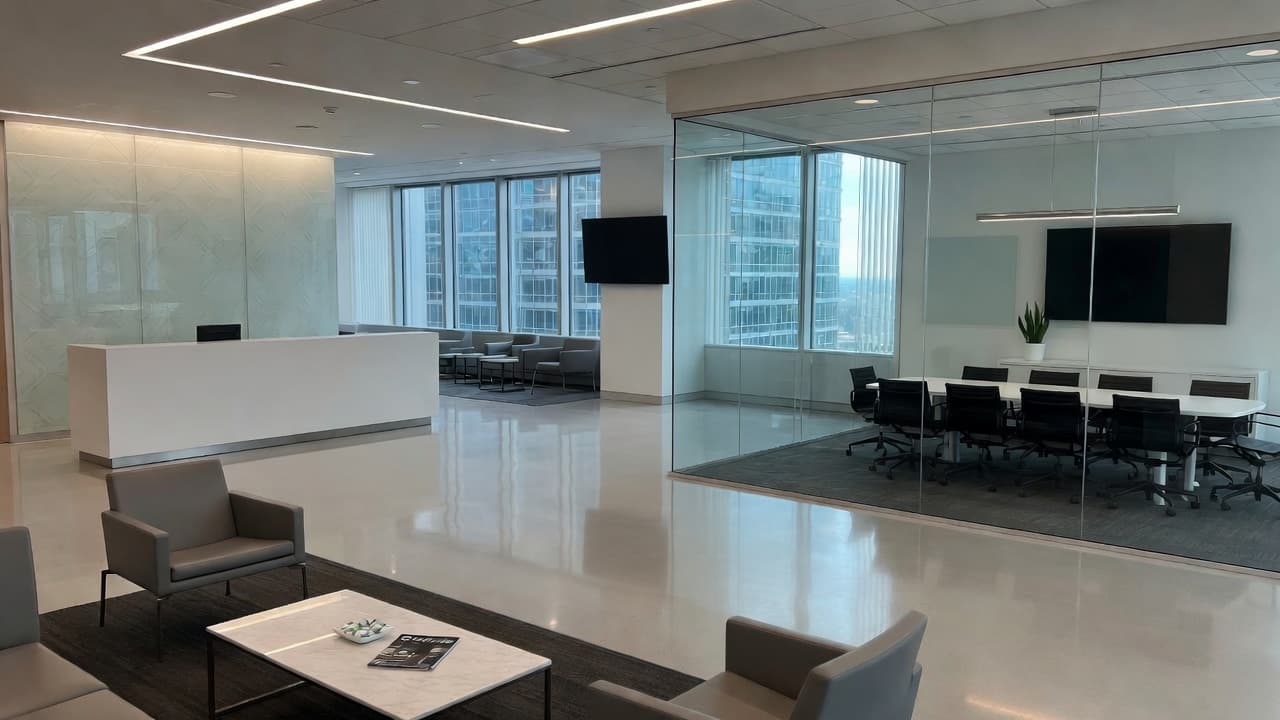
Gym & Fitness Studio Cleaning Services in Toronto & the GTA
Gym cleaning services in Toronto and the GTA need to solve a different problem than a standard office contract: shared equipment, bare skin contact, and constant moisture in locker rooms and showers create a hygiene load a normal office-style cleaning schedule was never built to handle. Pro City Maids provides gym cleaning services throughout Toronto and the GTA, sanitizing cardio and strength equipment, locker rooms, studio floors, and shared mat or prop storage on a schedule matched to actual member traffic, whether that's a freestanding commercial gym, a boutique yoga or spin studio, or a shared amenity gym inside a condo or apartment building.
Quick answer
Ready to set up gym cleaning services in Toronto or the GTA?
No long lock-in contracts • After-hours & overnight available • 647-691-6911
Who Needs Gym Cleaning Services in Toronto & the GTA
This guide is for gym owners, boutique studio owners and instructors, franchise fitness location managers, and condo or apartment property managers across Toronto, Mississauga, Vaughan, Markham, Richmond Hill, and the rest of the GTA who are setting up or reviewing gym cleaning services for a fitness space. It covers freestanding commercial gyms, boutique studios (yoga, pilates, spin, barre, CrossFit), and shared amenity gyms inside residential buildings. If your main concern is a standard office or retail space rather than a fitness facility, see our office cleaning or retail cleaning guides instead.
Why Gym Cleaning Services Differ From Standard Office Cleaning
A typical office cleaning scope, floors, washrooms, kitchen, trash, and a light wipe of desks, doesn't map onto a fitness facility's actual risk profile. Three things make gym and studio cleaning a distinct service rather than a heavier version of office cleaning:
- Direct skin contact with shared surfaces. A desk gets touched by one person; a cardio machine handle, a shared barbell, or a yoga mat gets touched by dozens of sweating members in a single day, often with bare skin.
- Moisture is constant, not occasional. Locker rooms, showers, and change areas stay damp for hours after peak class times, which is exactly the environment bacteria, fungus, and mould need to establish, unlike an office washroom that dries out between uses.
- Equipment materials need specific products. Upholstered benches, vinyl padding, and rubber flooring can be damaged or discoloured by the wrong disinfectant strength, so a generic all-purpose cleaner used on office desks is the wrong tool here.
Three Kinds of GTA Fitness Spaces, Three Different Cleaning Plans
Most gym cleaning content online treats every fitness facility the same. In practice, the GTA market has three genuinely different property types, and we scope each differently:
- Freestanding commercial gyms. Traditional 24-hour or staffed gyms with cardio rows, free-weight areas, resistance machines, and full locker rooms with showers. Highest equipment volume, often the longest operating hours.
- Boutique studios. Yoga, pilates, spin, barre, and CrossFit-style studios. Lower equipment count but heavier floor use, shared mats, blocks, straps, and bikes, and a tighter turnaround between back-to-back classes.
- Condo & apartment amenity gyms. Shared fitness rooms inside residential buildings, smaller footprint, resident-only access, and typically maintained under the building's own common-element cleaning contract rather than a standalone commercial account. Covered in detail below.
How Often Each Zone Should Be Cleaned
Cleaning frequency should match traffic and moisture, not square footage. A zone-by-zone approach, rather than one flat "gym cleaning" frequency, is the single biggest difference between a real fitness cleaning plan and a generic commercial contract:
| Zone | Member-level wipe-down | Professional disinfection |
|---|---|---|
| Cardio & strength equipment | After every use (wipe stations) | Daily minimum; twice daily for 24-hour or high-traffic facilities |
| Free weights & racks | Encouraged, rarely consistent | Daily, full wipe of handles and plates |
| Studio floor & shared mats/props | Individual mat wipe after class | Full floor disinfection between class blocks or end of day |
| Locker rooms & showers | N/A | Daily minimum; twice daily for busier facilities |
| Reception, mirrors & glass | N/A | Daily, with a mid-day touch-up on high-traffic days |
Zone-by-Zone Cleaning Checklist
Cardio & Strength Floor
- Cardio machine handles, consoles, and seat surfaces
- Free-weight handles, plates, and rack contact points
- Resistance machine grips, pads, and adjustment pins
- Rubber flooring and mats under heavy-use stations
Studio & Class Space
- Full floor disinfection between class blocks, not just a sweep
- Shared mats, blocks, straps, and resistance bands
- Spin bikes: seat, handlebars, console, and pedal straps
- Mirrors and any barre or wall-mounted equipment
Locker Rooms & Showers
- Shower controls, faucet handles, and bench surfaces
- Locker door handles and combination locks
- Floor drains and grout, with attention to mould-prone areas
- Full fixture disinfection, not just a wipe-down
Reception & Common Areas
- Front desk, check-in kiosk or tablet, and payment terminal
- Entrance door handles and glass
- Water refill stations and vending machine buttons
- Waiting-area seating and any retail display surfaces
Condo & Building Amenity Gyms: Who Is Actually Responsible?
The GTA has an unusually large stock of condo and purpose-built rental buildings with their own private fitness rooms, and cleaning responsibility for these spaces is a genuinely common source of confusion. Under Ontario's Condominium Act, 1998 (S.O. 1998, c. 19, s. 90(1)), "the corporation shall maintain the common elements and each owner shall maintain the owner's unit," and a shared amenity fitness room is a common element, not part of any individual unit. In practice that means:
- The condo corporation, not residents, is generally responsible for keeping a shared fitness room maintained, the same as the lobby, hallways, or elevators.
- A declaration can shift this obligation (s. 91 of the same Act allows a building's declaration to alter the default maintenance rules), so the exact split can vary building to building, and we confirm scope with property management rather than assuming a default.
- This is typically billed through the corporation's existing janitorial or common-area contract, not as a separate line item to residents, and we're used to folding a building's amenity gym into a broader common-area cleaning program alongside the lobby and hallways.
We coordinate directly with property managers or condo boards on scope, access, and billing for amenity gym cleaning, and can bundle it with existing common-area services rather than treating it as a standalone account. See our condo cleaning guide for how this fits alongside broader building-wide cleaning.
24-Hour Access, Off-Hours Scheduling & Security
A large share of GTA gyms and boutique studios now run on unstaffed access models, keypad codes, fob entry, or app-based unlock, for at least part of the day. That changes how cleaning needs to be scheduled and secured:
- Cleaning runs in the lowest-traffic window, typically overnight or early morning, so floors and equipment are dry and ready before the first members or class arrives, the same logic as our overnight office and janitorial scheduling.
- Access is coordinated the same way as a janitorial building account: we work with owners or property management on key/fob sign-out, alarm codes, and after-hours access protocols, and follow whatever procedure your facility requires.
- Class-block scheduling for boutique studios often needs a short mid-day or between-class pass rather than one end-of-day visit, since a 6am and a 6pm class can't share the same floor disinfection.
What We Use on Equipment and High-Touch Surfaces
We use hospital-grade, Health Canada DIN-numbered disinfectants applied for the exact dwell or contact time listed on the product label, the same standard we hold ourselves to on our medical and dental office cleaning accounts. Locker rooms and showers get a stronger mould- and mildew-resistant approach given the constant moisture, and on request we use equipment-manufacturer-approved, non-abrasive products on upholstered or vinyl-padded machines to avoid breaking down padding or voiding a manufacturer warranty. This is the same product-chemistry discipline covered in more depth in our flu-season disinfection guide, applied to a facility where it matters every single day of the year, not just during peak illness season.
GTA-Specific Considerations
The GTA's fitness market has grown well beyond a handful of big-box chains: boutique studios have expanded rapidly through neighbourhoods like King West, Leaside, and Yorkville, condo and purpose-built rental towers across Toronto, Mississauga, and North York increasingly include private amenity gyms as a standard building feature, and 24-hour access gyms have become common along commuter corridors like Highway 7 and the QEW where members train before or after long commutes. That combination means a GTA fitness cleaning provider needs to handle both ends of the spectrum, a five-minute studio wipe-down between spin classes and a full overnight commercial gym service, sometimes for the same client operating multiple locations across the region. Winter road salt tracked in through entrances is also a real factor for ground-floor gyms and studios, the same slip-safety concern covered in our flu-season cleaning guide, and worth a higher-frequency entrance floor pass through the winter months.
Signs Your Fitness Space Needs a Better Cleaning Plan
- Members or residents are commenting on odour, sticky equipment, or visible grime in reviews, on social media, or directly to staff.
- Your current cleaning contract is a generic office scope that was never actually written for equipment, mats, or locker rooms.
- A condo board or property manager can't say who is responsible for the building's amenity gym, a sign the common-element cleaning contract never explicitly picked it up.
- Class schedules have grown denser than when the current cleaning frequency was first set, leaving less recovery time between sessions for the floor and shared props.
- You've expanded to unstaffed or 24-hour access without updating how or when cleaning actually happens.
We also serve gyms, studios, and building amenity spaces in Mississauga, Vaughan, Markham, Richmond Hill, and Brampton.
Frequently Asked Questions
How often should gym equipment actually be cleaned?
High-touch equipment, cardio machine handles and consoles, free-weight handles, resistance machine grips and pads, should be wiped down between uses by members with provided wipes or spray stations, and given a full disinfection pass by a cleaning team at least once daily, with busier 24-hour or peak-hour facilities needing two passes. This member-wipe-plus-professional-disinfection combination is the standard most GTA gym cleaning services and equipment manufacturers recommend, since member wipe-downs alone don't reliably hit full disinfectant contact time.
Do you clean condo and apartment building amenity gyms?
Yes. Building amenity fitness rooms are a large part of our GTA commercial work, and we scope them the same way we scope a standalone gym: equipment, mats, mirrors, and any attached washroom or locker area, coordinated with your property management company or superintendent rather than an individual unit owner. Under the Condominium Act, 1998 (ontario.ca/laws/statute/98c19, s. 90), the corporation is generally responsible for maintaining common elements, which includes a shared fitness room, so this is typically billed to the corporation or through the management company's existing janitorial contract, not to residents directly.
Can you clean a 24-hour or unstaffed gym overnight?
Yes. Many boutique studios and larger gyms in Toronto and the GTA operate with unstaffed overnight access using keypad or fob entry, and we coordinate with owners or property management on keyholder or access-code protocols the same way we do for after-hours office and janitorial accounts. Most fitness facility cleaning runs overnight or in the lowest-traffic window specifically so equipment and floors are dry and ready before the first members arrive.
What products do you use on gym equipment and locker rooms?
Hospital-grade, Health Canada DIN-numbered disinfectants applied for the exact dwell or contact time listed on the product label, the same standard we hold ourselves to on our medical and dental office cleaning accounts. Locker rooms and showers get a stronger mould- and mildew-resistant approach given the constant moisture, and we can use equipment-manufacturer-approved, non-abrasive disinfectants on upholstered or vinyl-padded machines on request to avoid breaking down padding or voiding a warranty.
Do boutique studios (yoga, pilates, spin, CrossFit) need a different cleaning plan than a traditional gym?
Yes, meaningfully. A yoga or pilates studio's main hygiene concern is the floor and shared mat/prop storage, not cardio machine consoles, so cleaning focuses on floor disinfection between classes and mat/block/strap sanitization rather than equipment wipe-downs. A CrossFit box or strength-focused studio has heavier floor-impact wear and shared barbells, plates, and rigs instead of cardio machines. We scope each studio type individually rather than applying one flat gym checklist to every facility.
Is a nightly or weekly cleaning schedule enough for a small fitness studio?
It depends on class volume and member traffic more than square footage. A boutique studio running 4 to 6 classes a day usually needs at minimum a full end-of-day clean plus a mid-day floor and high-touch pass; a lower-volume studio with 1 to 2 classes a day can often run on a 3x-per-week schedule with owner or instructor wipe-downs between classes. We can review your class schedule and recommend a realistic frequency during a free walkthrough rather than defaulting to the highest tier.
How do you handle locker rooms and showers specifically?
Locker rooms and showers get disinfected at least once daily, and twice daily for busier facilities, since the combination of moisture, bare feet, and shared surfaces makes them the highest-risk zone in any fitness facility, ahead of the workout floor itself. That includes faucet handles, shower controls, bench surfaces, locker door handles, and floor drains, with attention to mould-prone grout and caulking on a longer cycle.