
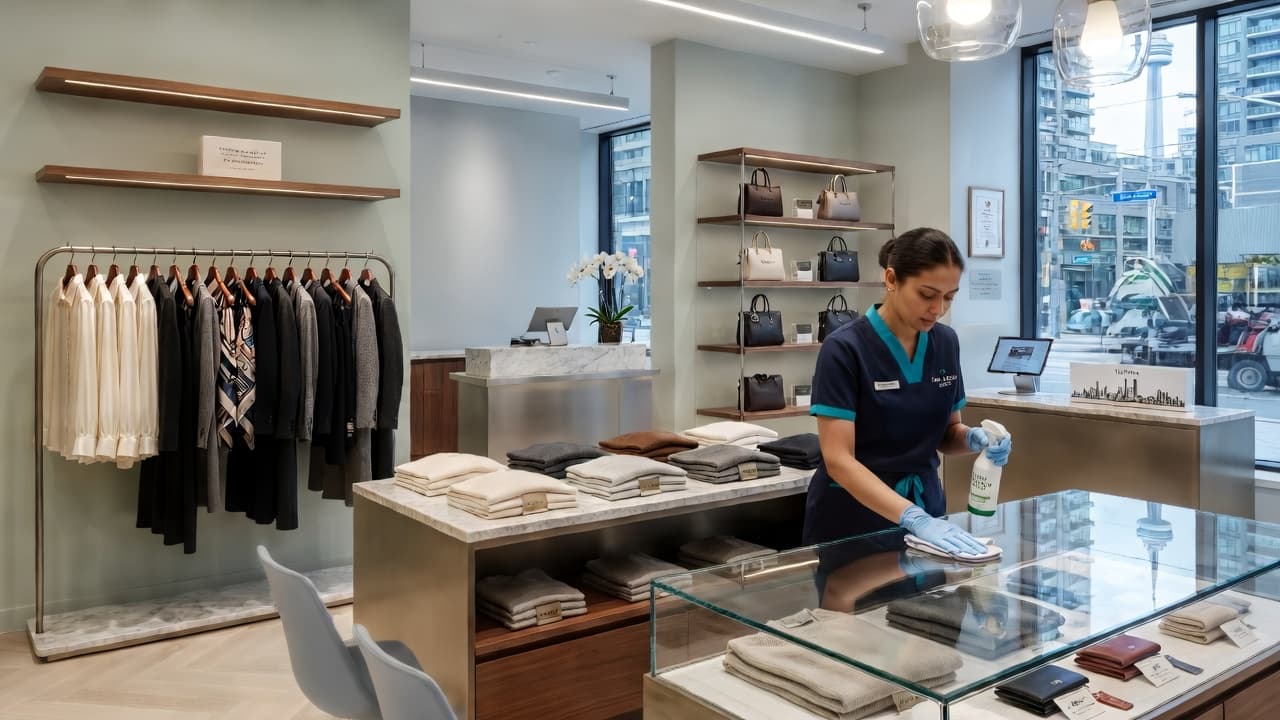
Hair Salon & Spa Cleaning Services in Toronto & the GTA
Hair salon and spa cleaning in Toronto is not a heavier version of office cleaning. Salons, barbershops, nail studios, and day spas are regulated in Ontario as personal service settings, inspected by public health, and judged by clients the moment they sit down in front of a mirror. Pro City Maids provides salon cleaning in Toronto and spa cleaning across the GTA, handling floors, stations, shampoo bowls, washrooms, treatment rooms, and waste on a schedule built around your opening hours, while your trained staff keep the between-client tool reprocessing the regulation assigns to them. This guide explains where that line sits, what Ontario's rules actually say, and how often each zone needs attention.
Quick answer
Need salon or spa cleaning in Toronto or the GTA?
No long lock-in contracts • After-hours & closed-day cleaning • 647-691-6911
Who This Salon and Spa Cleaning Guide Is For
This guide is for owners and managers of hair salons, barbershops, nail salons, lash and brow studios, waxing and aesthetics studios, and day spas in Toronto, Mississauga, Vaughan, Markham, Richmond Hill, Brampton, and the rest of the GTA. It is also for property managers who lease ground-floor retail units to these businesses and want to know what a tenant's cleaning plan should cover. If you run a medical aesthetics clinic where injections or laser treatments are delivered by a physician or nurse, read the note on medi-spas below first, because a different set of standards may apply to you. If you run a general retail store or restaurant instead, our retail cleaning service is the better starting point.
What Ontario Requires of a Salon or Spa Space
Every hair, nail, aesthetics, and spa business in Ontario operates under Ontario Regulation 136/18, Personal Service Settings, made under the Health Protection and Promotion Act. Most cleaning company websites mention the regulation by name and stop there. The parts that matter for day-to-day cleaning are specific, and they are worth knowing before you hire anyone:
- Surfaces must be cleanable and kept sanitary (s. 8(1), para. 2). Floors, walls, ceilings, fixtures, and furniture must be in good repair, easily cleanable, smooth and impermeable, and maintained in a sanitary condition. A torn vinyl chair seat or a cracked shampoo-bowl seal is a compliance problem, not just a cosmetic one, because it can no longer be properly disinfected.
- A dedicated hand-wash sink, always stocked (s. 8(1), paras. 5 and 6). At least one sink used only for hand washing, accessible at all times, with hot and cold running water, soap in a dispenser, and single-service towels or a hot air dryer next to it.
- Waste receptacles and regular removal (s. 8(1), para. 8 and s. 8(4)). The setting needs receptacles for waste, including biomedical and laundry waste where applicable, and all waste must be removed as often as necessary to keep the setting sanitary.
- No dwelling or food use in the service area (s. 8(1), para. 3). The service area cannot double as a space for eating or storing food, which is why the staff lunch area needs to be a separate room and cleaned as one.
- Reusable tools cleaned and disinfected or sterilized between each use (s. 10(4)). This is the operator's duty, carried out by trained staff, and it is the part a cleaning company should not take over.
- Approved disinfectants, used as labelled (s. 11(2)). Each disinfectant needs a Health Canada DIN or NPN and must be used per the manufacturer's instructions. Chlorine bleach is the stated exception (s. 11(3)).
- Disinfection records kept for three years in total (s. 14). The name and concentration of each disinfectant, when a solution was prepared, and when it must be discarded, stored at the setting for one year and kept available for two more.
Toronto licensing and notice to public health
The regulation also requires the operator to post any inspection results as the inspector requests (s. 4) and to keep the setting free of animals other than service animals (s. 9). In Toronto, a separate City of Toronto Personal Services Settings licence applies to hairstyling, manicure and pedicure, aesthetics, electrolysis, and piercing businesses, and the City asks new operators to notify Toronto Public Health in writing at least 14 days before opening.
A note on medi-spas
Section 2(2)(d) says the regulation does not apply to a setting where services are primarily provided by a member of a regulated health profession practising that profession. A clinic where a physician or nurse delivers most treatments may therefore fall under that profession's infection prevention standards rather than O. Reg. 136/18. We clean those clinics to the same standard as our medical office cleaning accounts.
Who Cleans What: Your Team vs. a Cleaning Company
The most common gap we see in GTA salons is not dirt. It is an unclear split between what stylists and technicians do during the day and what the cleaning company does at night, which leaves the same few places untouched by anyone: the hydraulic column under a styling chair, the strainer in a shampoo bowl, the return-air grille over a nail table. A clear split looks like this.
What your staff handle during service hours
- Clean and disinfect or sterilize combs, brushes, clippers, shears, nail implements, and other reusable tools between clients, and keep the disinfection log
- Drain, scrub, and disinfect pedicure foot spas between clients per the manufacturer and public health guidance
- Sweep hair from around the chair after each cut and wipe the station, cape, and headrest
- Change towels, capes, and table linens between clients and bag used laundry
- Dispose of sharps (razor blades, lancets) in a sharps container right after use
What Pro City Maids handles after hours
- Full dust-mop and wet-mop of every floor, including under stations, dryer chairs, and retail displays where hair and nail dust collect
- Clean and disinfect station counters, mirrors, chair arms, footrests, and chair bases
- Clean shampoo bowls, faucets, and back-bar counters, and clear sink strainers of hair (not drain plumbing)
- Clean and restock the hand-wash sink: soap dispenser, paper towels, and the splash wall behind it
- Clean and disinfect washrooms and initial the posted washroom cleaning record
- Empty general waste and replace liners; leave sharps containers and biomedical waste to your licensed disposal arrangement
- Clean reception, the card terminal, door handles, entrance glass, and retail shelving
- Flag anything that can no longer be cleaned properly, such as torn upholstery or failing caulking, so you can repair it before an inspector notes it
Pro tip from our commercial teams
How Often Each Salon Zone Should Be Cleaned
Frequency should follow how a zone is used, not the size of the unit. This is the zone-by-zone schedule we start from for a busy GTA salon or spa open five or six days a week, adjusted after the walkthrough.
| Zone | Between clients | Nightly (professional) | Weekly / monthly |
|---|---|---|---|
| Service tools (combs, clippers, implements, foot spas) | Your staff, between every client | Not a cleaner task | Your staff reprocess and log per O. Reg. 136/18 |
| Styling stations, mirrors, chairs | Stylist wipe-down between clients | Full clean and disinfection nightly | Chair bases, footrests, hydraulic columns weekly |
| Floors (hair, nail dust, product drips) | Stylist sweep after each cut | Dust-mop and wet-mop nightly | Baseboards and under-station detail weekly; machine scrub monthly |
| Shampoo bowls and back-bar sinks | Rinse and wipe between clients | Bowl, faucet, and counter clean nightly; strainers cleared | Colour stain treatment and caulking check monthly |
| Hand-wash sink and dispensers | Staff use only | Clean and restock soap and paper towels nightly | Dispenser exterior and splash wall weekly |
| Washrooms | Spot check | Full clean and disinfection nightly, record initialled | Grout and exhaust fan weekly |
| Treatment rooms and pedicure chairs | Staff change linens, disinfect contact points | Surfaces, table frame, chair exterior, floor nightly | Walls, vents, and light fixtures monthly |
| Reception, retail shelves, waiting area | Front desk tidy | Desk, card terminal, door glass, floor nightly | Product shelving and window ledges weekly |
| Ventilation grilles, dryer hoods, light fixtures | N/A | N/A | Monthly in hair salons; weekly in nail salons |
For a two- or three-chair studio with light weekday traffic, two or three professional visits a week is usually enough, as long as staff keep up the between-client column. For a large salon open seven days, or a day spa with steam rooms and showers, nightly service plus a mid-day washroom check on Saturdays is the realistic minimum. For the general logic behind matching frequency to traffic, see our commercial cleaning frequency standards.
Hair Salons, Nail Salons, and Day Spas Need Different Plans
Grouping every personal service business into one "salon cleaning" package misses where each one actually gets dirty.
Hair salons and barbershops
The load is hair, product, and colour. Hair clippings are a slip hazard as well as a hygiene one, and they hide along edges. Colour and toner stain shampoo bowls, counters, and grout, and need a product matched to the surface rather than whatever is on the cart, since harsh abrasives dull porcelain and acrylic bowls and make the next stain harder to lift. Hairspray and heat-protectant overspray build a sticky film on mirrors, light fixtures, and dryer hoods that traps dust. Barbershops add clipper oil, neck-strip waste, and talc on the floor around each chair.
Nail salons and lash or brow studios
The load is fine dust and fumes. Acrylic and gel filing dust settles on every horizontal surface in the room, including tops of cabinets, shelving, and the grilles of ventilation units, and the regulation expects lighting and ventilation sufficient for sanitary operation (s. 8(1), para. 7). A nightly wipe of every horizontal surface and a weekly clean of ventilation grilles keeps that dust from becoming a film. Pedicure chair exteriors, armrests, and the floor around each foot spa get a nightly disinfection pass, while the foot spa basin itself stays with your technicians between clients.
Day spas and wellness studios
The load is moisture. Showers, steam rooms, change rooms, and hydrotherapy areas stay damp for hours, which is the environment mould and mildew need. These get a daily disinfection and a scheduled grout and caulking routine, the same wet-area approach we use in gym locker rooms and showers. Treatment rooms are cleaned after staff strip linens: massage and facial table surfaces and frames, side carts, door handles, light switches, and floors. Relaxation lounges are cleaned like a hospitality space: upholstery, tea and water stations, and soft-surface vacuuming.
How to Be Ready for a BodySafe Inspection in Toronto
BodySafe is Toronto Public Health's inspection program for personal service settings. The operator must post the inspection notice at or near the entrance where the public can see it. There are three colours a client can see:
- Green: Pass. No infractions found.
- Yellow: Conditional Pass. Significant infractions found, with a re-inspection within 48 business hours.
- Red: Closed. Crucial infractions, closing either specific services or the whole establishment.
Toronto Public Health says a routine inspection is likely conducted once a year, with a re-inspection when infractions are found and follow-up on complaints. Outside Toronto, the York Region, Peel, Durham, and Halton public health units enforce the same provincial regulation, though each region discloses results in its own way. An inspector focuses heavily on tool reprocessing and records, which is your team's work. But the environment is the first thing they see, and BodySafe's own published examples of significant infractions include "items not in good repair and the work environment is not clean or tidy" and a work area without a smooth, impervious surface.
Two Toronto specifics catch salons off guard. First, the smooth, impermeable surface rule covers furniture in the waiting area too, so fabric-upholstered lounge chairs are a problem. Second, Toronto Public Health states that disinfectant numbers issued by the US Environmental Protection Agency or Food and Drug Administration are not recognized in Canada, which matters for salons that order product online from US suppliers. A 10-minute pre-opening check we suggest to salon clients:
- Hand-wash sink clear of product bottles and tools, with soap and paper towels stocked
- No cracked, torn, or porous surfaces at stations, chairs, or treatment tables
- Waste receptacles emptied and lined; sharps container below its fill line
- Disinfectant containers labelled, with a Canadian DIN or NPN visible (not only a US EPA number), and the dated disinfection log up to date
- Waiting-area seating wipeable, not fabric
- No food or drinks stored or eaten in the service area
- Floors free of hair and product spills, especially under stations
- Current inspection notice posted where the inspector asked
Which Disinfectants a Salon Can Use in Ontario
Section 11 of O. Reg. 136/18 requires every disinfectant in a personal service setting to carry a Drug Identification Number (DIN) or Natural Product Number (NPN) assigned by Health Canada, and to be used as the manufacturer directs, with chlorine bleach the one exception. One change worth knowing about: under Health Canada's Biocides Regulations, in force since May 31, 2025, hard-surface disinfectants are moving from DINs to a new market authorization over a transition that closes on May 31, 2031, and a transitioned product keeps the same 8-digit number. So the practical test does not change: look for the 8-digit Health Canada number on the label. We explain that transition in more depth in our flu-season disinfection guide.
Pro City Maids uses Health Canada authorized disinfectants on salon and spa surfaces and leaves them on for the full contact time printed on the label, which is the step most often skipped when a surface is sprayed and wiped in one motion. We can share our product list and safety data sheets with your manager so your own records show what is used in the space overnight, and we avoid strong solvents on vinyl salon chairs and treatment-table upholstery, which crack and become uncleanable faster under the wrong product.
Late Hours, Closed Days, and Renovations
Many GTA salons run late appointments on weekday evenings and close one weekday, often Monday. We schedule the nightly clean after the last client and use the closed day for tasks that need empty stations and time to dry: machine scrubbing, baseboards, chair bases, vents, and grout. Access runs on keyholder or alarm-code protocols, the same as our contract janitorial accounts.
Renovations have their own rule. Under section 3 of O. Reg. 136/18, an operator who closes to renovate must give the local medical officer of health written notice at least 14 days before starting, and one who keeps serving clients during a renovation must give notice before work begins. Either way, construction dust in a space where clients sit with wet hair or open skin is a problem, so book a post-renovation clean before reopening. Our post-renovation cleaning guide covers what that clean should include, and the same applies to a brand-new salon before its first day.
Washrooms are the other scheduled item. Ontario now requires employers to post a record of the date and time of the two most recent cleanings of washrooms provided for workers, near the washroom or electronically, under O. Reg. 480/24. Our teams initial that record on every visit.
GTA-Specific Considerations
Many GTA salons and spas lease ground-floor units in condo podiums or retail plazas, where the landlord's janitorial contract covers lobbies, corridors, and shared washrooms but stops at the unit door. Confirm that split in writing before assuming the shared washroom your clients use is cleaned nightly. Winter is the other local factor: road salt and slush tracked in on boots leave white residue and slippery entrances from roughly November to April, and salon floors are already slick with product and hair. Through the winter we add an entrance mat and floor pass, and use a neutralizing cleaner on salt residue so it does not dull the floor finish.
Pro City Maids teams are vetted, bonded, and covered by $2M+ commercial liability insurance, and we work across the GTA without long lock-in contracts, so a salon can start with a trial month and adjust frequency once it sees the results.
Ready to Set Up Salon or Spa Cleaning?
Tell us how many stations, treatment rooms, and wet areas you have and when you are open, and we will recommend a realistic schedule after a free walkthrough.
We also clean salons, barbershops, and spas in Mississauga, Vaughan, Markham, Richmond Hill, and Brampton.
Frequently Asked Questions
Can a commercial cleaning company clean a hair salon or spa in Ontario?
Yes. Ontario Regulation 136/18 (Personal Service Settings) makes the salon operator responsible for the whole setting being sanitary, and nothing in it stops an operator from hiring a commercial cleaner for the environment: floors, walls, fixtures, washrooms, sinks, waste, and reception. What a cleaning company should not take over is reprocessing your service tools, meaning the combs, clippers, nail implements, and foot spas that must be cleaned and disinfected or sterilized between clients. Pro City Maids cleans the space around the service and leaves tool reprocessing with the trained staff who log it.
How often should a hair salon be professionally cleaned in Toronto?
Most busy Toronto and GTA hair salons need a professional clean five to six nights a week, matched to the days they are open, plus a deeper weekly or monthly pass on baseboards, vents, dryer hoods, and chair bases. Stylists still sweep hair and wipe stations between clients during the day. A small two-chair studio with light weekday traffic can often run on two or three professional visits a week. Pro City Maids sets the frequency after a free walkthrough based on chair count, wet areas, and opening hours rather than square footage alone.
What disinfectant does an Ontario salon have to use?
Under O. Reg. 136/18, section 11, disinfectants used in an Ontario personal service setting must carry a Drug Identification Number (DIN) or Natural Product Number (NPN) assigned by Health Canada and be used according to the manufacturer's instructions, with chlorine bleach as the one stated exception. Health Canada's Biocides Regulations are moving hard-surface disinfectants to a new market authorization over a transition that runs to 2031, and transitioned products keep the same 8-digit number, so check for that number on the label. Pro City Maids uses Health Canada authorized disinfectants at the label's contact time.
What do the green, yellow, and red BodySafe signs mean in Toronto?
Toronto Public Health's BodySafe program inspects hair, nail, aesthetics, tattoo, and piercing businesses and requires the result notice to be posted at or near the entrance. Green is a Pass with no infractions. Yellow is a Conditional Pass for significant infractions, with a re-inspection within 48 business hours. Red means services or the whole establishment were closed for crucial infractions. Toronto Public Health says a routine inspection is likely conducted once a year, plus follow-up on complaints. Environmental cleaning that Pro City Maids handles, like sanitary floors, stocked hand sinks, and waste removal, is part of what an inspector sees.
Do you clean nail salons, pedicure chairs, and spa treatment rooms?
Yes. In nail salons Pro City Maids handles the nightly environmental clean, including acrylic and gel dust on every horizontal surface, ventilation grilles, pedicure chair exteriors, floors, and washrooms, while your technicians keep the between-client foot spa disinfection and implement reprocessing the regulation requires. In day spas we clean treatment rooms, massage table surfaces after linens are stripped, relaxation lounges, change rooms, and showers. Wet areas get a mould-resistant routine on a set cycle rather than only when they look dirty.
Can you clean after the salon closes or on our closed day?
Yes, and for most salons that is the right time. Pro City Maids schedules salon and spa cleaning after the last client, often late evening on weekdays, and uses a weekly closed day, which for many GTA salons is Monday, for the deeper tasks that need dry floors and empty stations: machine scrubbing, baseboards, vents, and chair bases. We work with keyholder or alarm-code protocols the same way we do for after-hours office and janitorial accounts.
How much does salon or spa cleaning cost in Toronto?
Salon and spa cleaning in Toronto is priced on the number of stations and treatment rooms, wet areas such as shampoo bowls, pedicure chairs, showers, or a steam room, the number of washrooms, floor type, and how many nights a week you need service. Because those inputs vary so much between a two-chair barbershop and a ten-room day spa, Pro City Maids quotes after a free walkthrough rather than publishing a flat rate, and we do not lock salons into long-term contracts.
Does a salon need to keep washroom cleaning records in Ontario?
If the salon has workers, yes. Ontario now requires employers to keep washrooms provided for workers clean and sanitary and to post a record showing the date and time of the two most recent cleanings, either near the washroom or electronically where workers can see it, under O. Reg. 480/24. That is separate from the disinfection records O. Reg. 136/18 requires for tools. Pro City Maids teams initial a washroom cleaning record on every visit so the posted record stays current.